
목차
Strong magnetic materials can be found in most modern industrial activities, like electric motors, sensors, medical devices, and magnetic separating systems. Customers interested in search terms related to test methods of surface magnetic distribution tend to be more often engineers, quality managers, or purchasing managers who want to achieve consistency, performance, and security, not merely theory.
This article is written from this exact point of view. In this article, you can learn what surface magnetization distribution is, why it is important, how it is validated in real-world situations, and how this, in turn, relates to the actual accuracy of a product.
1. Understanding the Surface Magnetic Distribution of Strong Magnetic Products

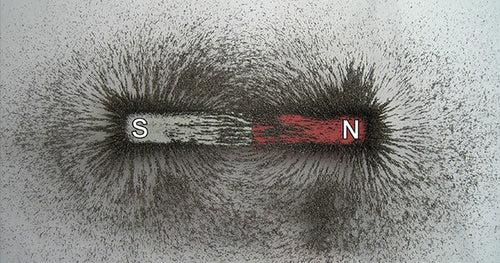
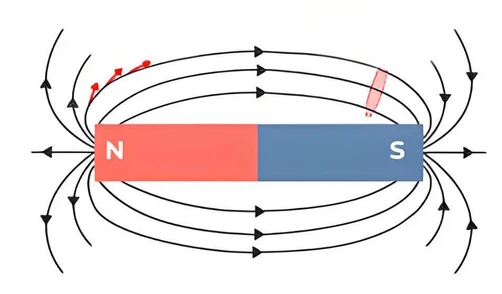
Surface magnetic distribution refers to the way in which magnetic flux density distributes itself on the outer surface of any magnetic product. It describes how the magnetic field strength and direction vary from point to point on the magnet. This distribution will determine how the magnet interacts with surrounding components, air gaps, and ferromagnetic materials.
The strong magnetic products have a very rare perfectly uniform magnetic field on their surface. Reasons for variation may include material microstructure, magnetization direction, and geometric design. Two magnets from the same grade and size would thus behave differently for application purposes.
The magnetic pole structure is closely associated with the surface magnetic distribution. Well-defined and symmetrical poles normally indicate correct magnetization, with stable internal magnetic domains. Contrasting with that, a distorted or uneven pattern of poles usually indicates either manufacturing defects or improper magnetizing processes.
The variety of magnetic material is an important factor that affects surface distribution. Neodymium magnets usually develop a high-intensity and strongly concentrated field at the surface, because of their high energy product. Ferrite and samarium cobalt show broader, less intense distributions, reflecting their different magnetic properties.
Another important factor is the shape of the magnet. There are flat magnets, ring magnets, arc magnets, and other complex magnets in terms of shape. These magnets also create different field patterns on their surfaces. For instance, sharp edges and corners tend to accumulate magnetic fields.
The processes of manufacturing processes carry immense weight in deciding how surface magnetically distributes the magnetization fields. The quality of the sintering processes and the machining processes may significantly contribute to the changes in the surface magnetization fields.
While useful for the user, the designers themselves gain greater insight as to the true form of the magnetic fields involved, which directly translates to a greater understanding of the variation of the natural attractions, the stability to which the device will orient, and the like.
2. The Importance of Surface Magnetic Distribution Testing for Strong Magnetic Products

While it is one thing to understand or know about the significance of the distribution of surface magnetization, it adds little value unless testing can validate that strong magnetic products meet specifications.
Ensuring Consistent Product Performance
In its simplest definition, surface magnetic distribution testing verifies a product with a strong magnetic force works as desired, even if its strength is not within desired values, as sometimes the inconsistency displayed by magnetic fields can cause a product to behave erratically despite its desired strength values.
Uniform distribution on the surface for the distribution of the magnetic field is helpful in the maintenance of a predictable attraction force, as well as the degree to which torque might be transmitted and how it might align. Relevant tests would aid verification accordingly.
Quality Control and Manufacturing Stability Supporter
Surface magnetic distribution testing is one of the most powerful quality control methods used by manufacturers of magnetic materials. With its aid, manufacturers may recognize changes resulting from different material properties or mistakes during magnetization. Moreover, without its help, problems may lie undiscovered until they actually fail.
By regularly monitoring surface magnetic patterns, manufacturers can identify process drift early. This enables timely corrective actions and improves overall manufacturing stability. As a result, scrap rates decrease and product quality becomes more consistent.
Reducing Application Failures and Field Complaints
Failure problems with strong magnetic products are often attributed to lack of balanced distribution rather than lack of magnetic intensity. The problems often manifest during use or after installation. At times they result in effects such as vibrations, noise, misalignment, or unbalanced functionality.
Surface magnetization testing can also assist us in identifying these various issues prior to delivery. This will, in turn, prevent us from costly failures. It also minimizes failures under warranties. These directly affect customer happiness.
Improving Safety in the Handling of Intense Magnetism Products
Products with strong magnetic materials may pose some risks if a sudden force of attraction is unsteady. Such a sudden joining of parts may damage equipment or lead to injury. This potential for injury or equipment damage may be more pronounced depending on how strong the material’s magnetism is.
Testing of the surface distribution of the magnetic field assures a controlled, i.e., predicable, behavior of the surface field. This is important, especially during manipulative work involving strong permanent magnets.
Meeting Industry Standards and Customer Requirements
In many fields, it is necessary to obtain verification of a magnetic field as part of a field’s quality and regulatory requirements. The objective measurements from a surface distribution test aid in meeting automotive, aerospace, and medical requirements.
Detailed test reports also instill confidence in customers regarding customer products. This is particularly because it indicates that instead of hypothesizing, a thorough evaluation of magnetic performance takes place.
Assuring Interchangeability and Batch Consistency
Magnets or magnet suppliers should perform consistently for their customers. Changes in their surface pattern may result in difficulties and inconsistencies within machine assembly and operation. This is important for replacement parts.
Testing the magnetic distribution on the surfaces checks the uniformity between batches and between units. This ensures interchangeability of the magnets with no need to readjust.
Supporting Accurate Magnetic System Design
The data on surface magnetic distributions is valuable information that design engineers use when designing magnetic systems. Without this data, design engineers make assumptions and use this information to make crucial decisions.
Enhancing Long-Term Reliability and Service Life
The method of enhancing long-term reliability and service life includes:
Non-uniform distribution of a surface’s magnetic field can lead to non-uniform forces that can be present in a magnetic assembly, causing it to lose efficiency over the course of time due to its effect on bearings, shafts, and housing components.
Verifying the surface distribution of magnetism helps manufacturers improve the final product’s long-term reliability by ensuring it performs consistently throughout its useful life.
Building Supplier Credibility and Market Competitiveness
Providing information on surface magnetic distribution is an active sign of strong technical expertise or control of manufacturing processes.It shows that you, as a supplier, comprehend theory as well as application requirements.
It separates suppliers in an competitive world. For the customer, this degree of transparency helps to instill trust. It can also act as a key driver for long-term business and repeat business.
3. Test Method for Surface Magnetic Distribution of Strong Magnetic Products

Different testing methods are adopted for testing surface distribution. The testing methods may vary according to different levels of accuracy and speed. The selection of testing procedures also varies according to product types and their applications.
Gauss Meter Point Measurement Method
The most commonly used instrument in the measurement of surface magnetic properties is known as a gauss meter. With it, it is possible to perform measurements of flux density in certain areas of the magnet’s surfaces.
As the testing process is conducted, various positions of the magnet attract the probe. Several tests create a basic surface profile. In such a process, accuracy is considered.
This method is simple, economic, and frequently used in the production field, which makes it satisfactory for everyday quality checking and inspection for incoming materials.
Surface Scanning with Gauss Meters
For instance, surface scanning improves point measurement by scanning the magnet in a grid pattern with a sensing probe. The process gives a full view of magnetic field distribution on surfaces.
Fixtures can be useful to ensure consistent distance and direction between probes. This helps to provide better repetition and decrease errors involved. Scanning is usually used in process validation and failure investigation.
Magnetic Viewing Film Inspection
Magnetic viewing film allows for a graphical depiction of the surface magnetic fields. When applied to a magnet, it clearly reveals pole locations and field patterns. This enables the operator to identify any irregularities easily.
It is a fast and intuitive test method with minimal setup. This method is quite common in preliminary inspection and troubleshooting. However, no numerical data can be obtained by it.
The viewing of film is best utilized in concert with quantitative methods of measurement. This would provide both a visual and numerical insight into the problem at hand.
Hall Sensor Array Mapping
High-resolution mapping of surface magnetic distribution is possible with Hall sensor arrays. Multiple sensors measure the magnetic field across an area simultaneously. The result is high-resolution field maps.
Software transforms sensor data into color-coded images. These maps clearly illustrate the strength and distribution of a field. It boasts a very high accuracy and good repeatability.
Hall sensor mapping is generally done in research and high-end quality control. It has immense value for precision magnetic products.
Automated Surface Magnetic Testers
Automated test systems combine magnetic sensors with controlled motion platforms. They scan magnets in a repeatable and standardized manner; operator influence is reduced to a minimum.
4. How to Ensure the Accuracy of Surface Magnetic Distribution Testing for Strong Magnetic Products
Effective testing not only requires the latest equipment. Procedures and conditions also have to be in place. Otherwise, false readings might follow.
Calibration of all measuring instruments with certified standards in their use must be carried out regularly. Calibration helps in ensuring that all measurements made remain accurate with the passage of time; otherwise, their reliability cannot be guaranteed.
Probe positioning is an additional factor to consider, with small changes in distance and angle having a large impact upon the measurement readings. Fixtures help to hold the geometry of the measurement in place.
The environmental conditions may affect the functioning of the magnet and sensor. The testing conditions need to be controlled. This will reduce the variability of measurements.
Magnetic interference effects also need to be reduced to a minimum, and ferrous objects or external magnetic fields can influence the outcome. Special testing spaces are used for this.
Repeat tests enhance confidence with respect to the outcomes. They show that measurements can vary, becoming stable. These testing procedures encourage consistency among operators.
5. The Influence of Magnetic Field Distribution on the Performance of Strong Magnetic Products
There is little doubt that surface magnetic field patterns directly affect performance in an immediately quantifiable manner. Magnets of proper strength can fail if their surface fields are improperly distributed. Magnets can have proper strength yet still fail if they have improper patterns of magnetic fields or forces.
With uniform magnetic field distribution, it is enabled to perform its role in a stable manner. A stable performance by a magnetic field is important in some mechanical functions.
In an electrical motor, surface field asymmetries cause torque ripple. This will eventually lead to vibration, noise, and inefficiency. Moreover, vibration will lead to wear and tear on the equipment.
Sensors using magnetic fields are very sensitive to changes in magnetic fields on the surface. An irregular variation in the magnetic field around the surface causes signal disturbance.
When utilizing the concept of magnetic couplings, surface fields are balanced for smooth transmission of the torques. However, any unevenness can result in stress points.
Surface field strength plays an important role in the determination of the performance of the magnetic separating equipment. Less effective field strength impedes the passage of materials, leading to purity being compromised.
In extremely stable devices such as in medical and scientific industries, devices need highly stable magnets. Changes in surface fields can impair accuracy or safety. Surface magnetic distribution tests MUST be conducted.
In consumer or industrial product applications, consistent surface fields provide enhanced usability or reliability in that they can be used with minimal problems. Indeed, consumer or industrial product applications can always perform well without any issues.
From an engineering point of view, data on magnetic distribution on the surfaces helps in optimization. In this way, designers can minimize time and expenses.
결론
Surface magnetic distribution is a fundamental factor that determines the performance of strong magnetic materials. It impacts quality, safety, dependability, and customer satisfaction. Ignoring this factor means that products would behave unpredictably.
Those looking to find the test methods of surface magnetic distribution need practical solutions. They need to know that the magnets, if used in real-world conditions, behave in a consistent fashion.
By knowing surface magnetic distribution, selecting proper testing methods, and ensuring testing accuracy, magnetic properties can be predictable. It is not just important, it is required Surface magnetic distribution testing is essential for modern magnetic products!





 Korean
  English
  Spanish
  French
  Italian
  Portuguese
  Arabic
  Turkish
  Chinese
  Vietnamese
  Thai
Thai  Japanese