
جدول المحتويات
Permanent magnet couplings are increasingly searched for by engineers, maintenance managers, and industrial buyers who need reliable, seal-less, and low-maintenance power transmission. Most of the people doing research on this topic are confronted with some recurring problems regarding seal leakage, high downtime, very frequent maintenance, or safety risks in rotating equipment.
More and more, traditional mechanical couplings falter in an increasing number of industries where the smallest failure may result in expensive shutdowns or other environmental hazards. Permanent magnet couplings are a new way out, eliminating physical contact between rotating parts. In this buying guide, we will explain the technology in detail: how it works, for which applications it is best suited, and if it is worth investing in.
1. What Is a Permanent Magnet Coupling?
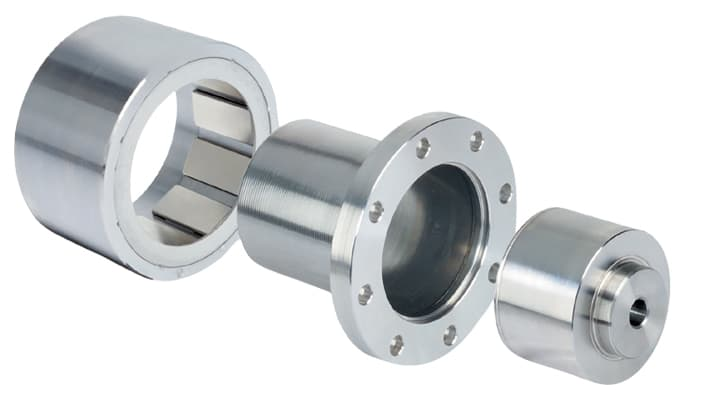
Permanent magnet coupling can be defined as a non-contact type of mechanical device utilized for transmitting a certain level of rotational torque with the use of magnetic force. It helps in the transfer of torque from a driving shaft, primarily fixed on an electric motor, without the interaction of the two shafts.
Unlike the usual couplings that have transmission by friction, gears, and/or flexibility, the permanent magnet coupling uses magnetic fields that are produced by permanent magnet. These magnetic fields transcend the air gap normally present or the other containment barrier that links the two shafts. There is total elimination of mechanical wear at the coupling.
From an engineering perspective, this design eliminates one of the largest failure modes in a rotating assembly. Traditionally, in a mechanical seal, as well as a contact type coupling, wear, leakage, or misalignment are critical concerns; in a PMC, none of these concerns exist.
These couplings, permanently magnetic in nature, find their most popular usages in pumping equipment, mixers, compressors, and agitators. They have their highest value when the working fluids have characteristics such as corrosive, poisonous, inflammable, and highly purified. It is to be noted that even small amounts of leakage always create a major problem.
Another factor that defines permanent magnet couplings is the shaft isolation. The shaft may either be completely isolated with the non-magnetic containment shell. In most permanent magnet couplings, no dynamic seals are required.
Permanent magnetic couplings are not just a part of the mechanical system from the buyer’s point of view; they are used as solutions to the question of reliability that can lower costs in the long run while providing a safe system that runs effectively with lower initial costs. Even though they have a very high initial cost, most people would attest that the investment was well worth it in the end.
2. Working Principle of Permanent Magnet Couplings
The basis of the working of permanent magnet coupling is on the controlled magnetic interaction of two pairs of permanent magnets. These pairs of permanent magnets contain alternate north and south poles resulting in a strong magnetic field.
“One magnet assembly is attached to the driving shaft, normally driven by an electrical motor. The second magnet assembly is attached to the driven or ‘load-carrying’ shaft, e.g., a pump impeller or a mixer blade.” They are arranged such that they are in contact through a small “air gap or a non-magnetic containment shell.”
As the rotating motion occurs, the magnetic field produced by the driving magnets also rotates. Due to the rotating magnetic field, a magnetic force is induced in the driving magnets. As a result, rotation is achieved between the driving and the driven shafts without a physical touch between them.
The transmission of the torque can be attributed to the fact that, by nature, magnetic poles have the ability to align themselves. As long as the amount of torque needed is within the specifications, the operation is synchronous.
Due to the non-existent nature of friction within the components of the coupling, the level of heat generated is significantly low. Another advantage is the level of vibrations in relation to mechanical couplings. This means the operation will be quiet and the system will be stable in the future.
From the perspective of the user, the above principle translates into a predictable response under fault conditions. It can be regarded as a device for the transmission of torque and an automatic safety device.
3. What Are Permanent Magnet Couplings Composed Of?
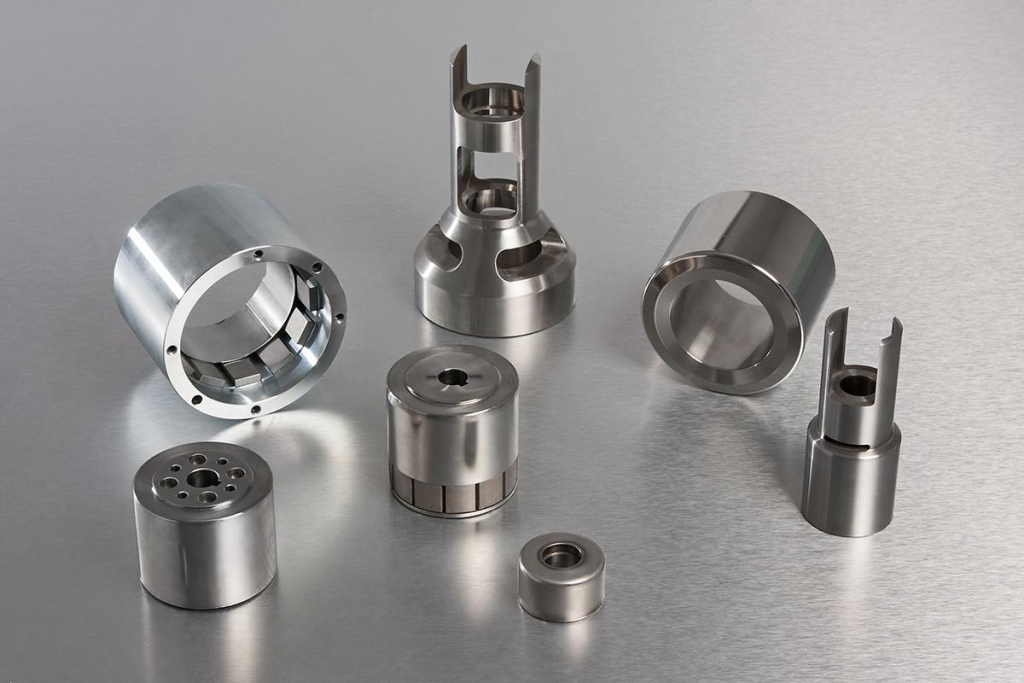
Permanent magnet couplings are made up of several carefully engineered components. Each part plays a direct role in torque capacity, efficiency, durability, and overall cost. Understanding these components helps buyers assess product quality.
Permanent Magnets
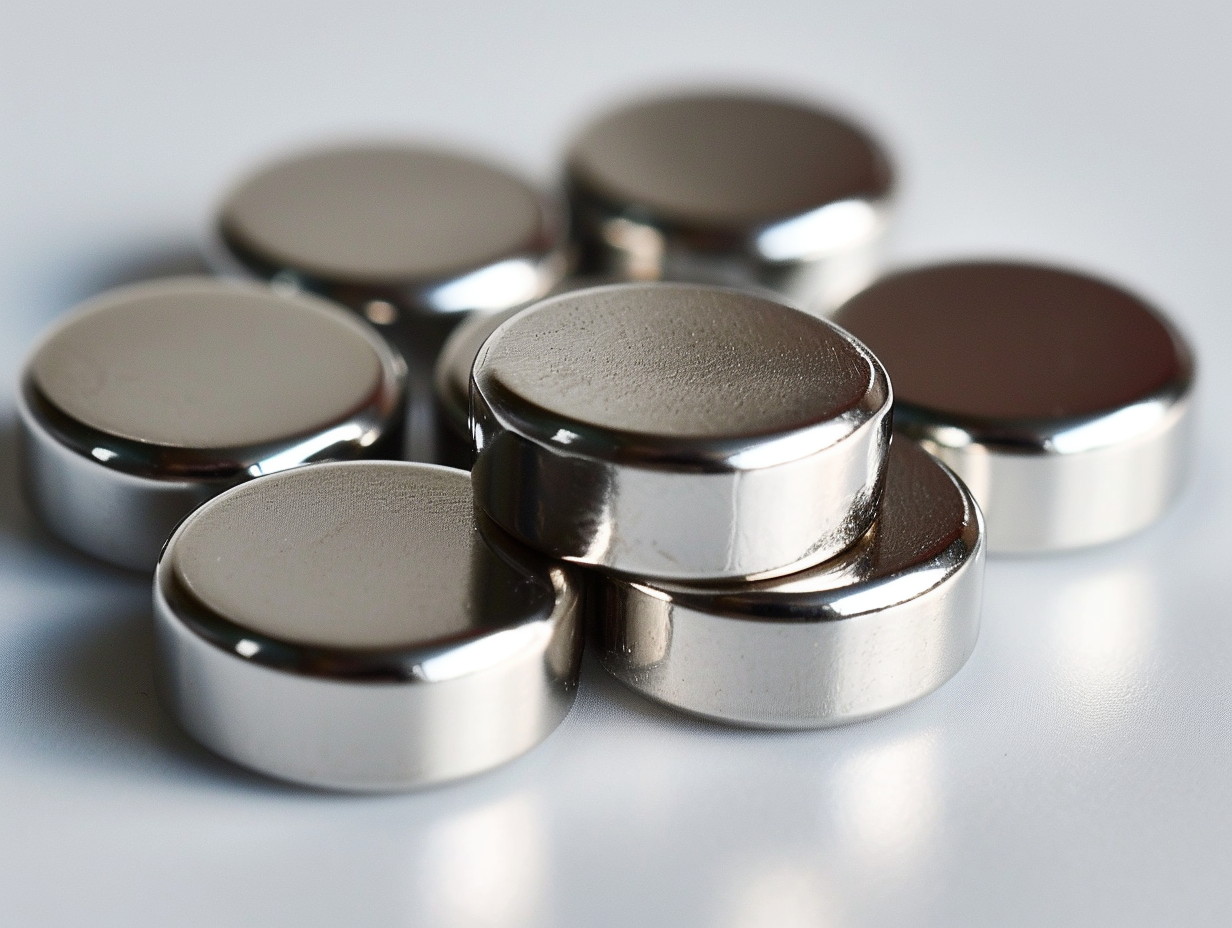
Permanent magnets are the main components that make the core. Industrial permanent magnet couplings usually utilize neodymium or ND feb permanent magnets because they are the strongest permanent magnet material.
These kinds of magnets allow for the transmission of high torques with compact design. The efficiency of the machine increases with the use of better-quality magnets because of lesser chances of slippages. The quality of the magnet directly influences the smooth operation of the equipment.
The selection process for the grade of a magnet is equally important for temperature resistance and long-time durability. Buyers usually compare various specification details for a magnet before buying a particular magnet from a manufacturer.
Inner Rotor Assembly
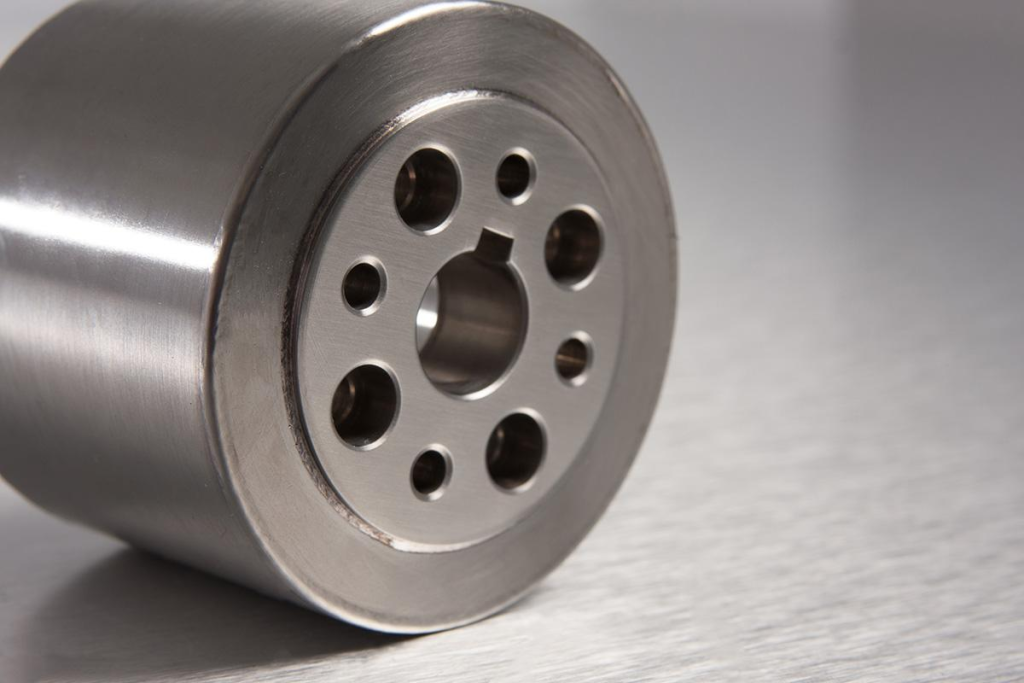
The inner rotor is mounted on the driving shaft. It maintains the magnets in an accurate position.
The rotor is usually made of high-strength steel or stainless steel. Careful manufacturing allows for smooth rotation even at high speeds.
The consequences of poor balancing include excessive machine vibration leading to early bearing failure.
A good inner rotor will help ensure efficiency in the transmission of torque, as well as reliability in operation in the long term.
Outer Rotor Assembly
The outer rotor is connected to the driven shaft. It contains magnets arranged to interact with the inner rotor’s magnetic field.
As the magnetic field rotates, the outer rotor follows without physical contact. Accurate alignment between rotors is essential for stable operation.
In sealed systems, the outer rotor of the motor fully isolates from the motor side. Thus, it provides complete separation between drive components and process media.
Containment Shell
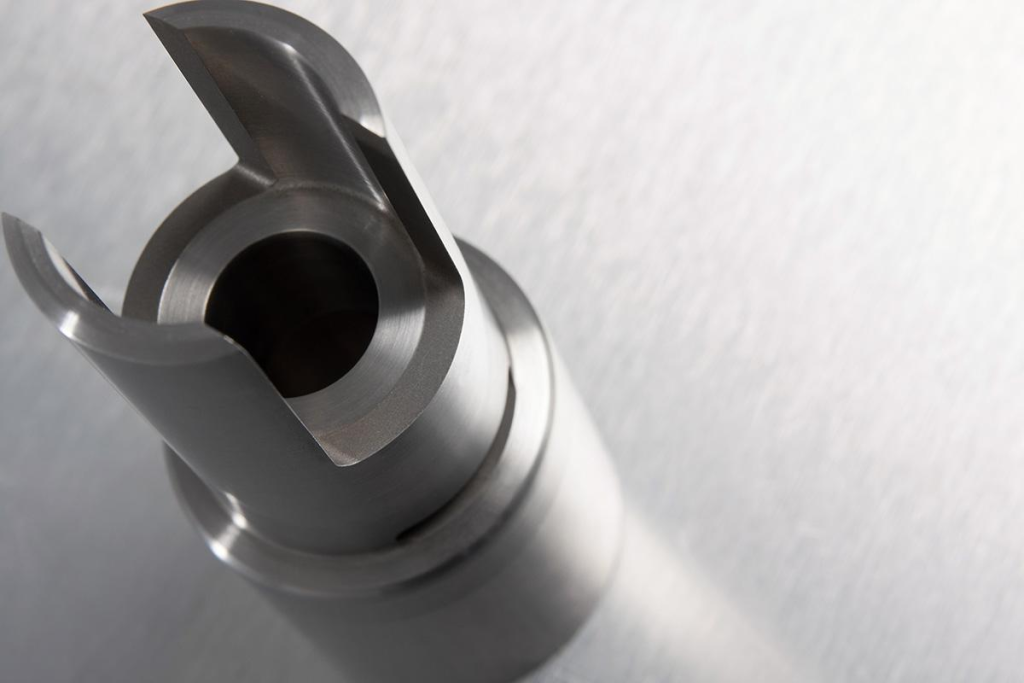
The majority of permanent magnet couplings utilize a containment shell located between the two rotors. In essence, this shell physically separates the driving and driven sides.
It is typically manufactured using non-magnetic materials, such as stainless steel, Hastelloy, or titanium. The pressure, corrosion, and mechanical stresses are those conditions that the shell must resist.
The containment shell eliminates the need for mechanical seals. This is critical in hazardous, high-purity, or environmentally sensitive applications.
4. What Are the Performance Parameters of Permanent Magnet Couplings?
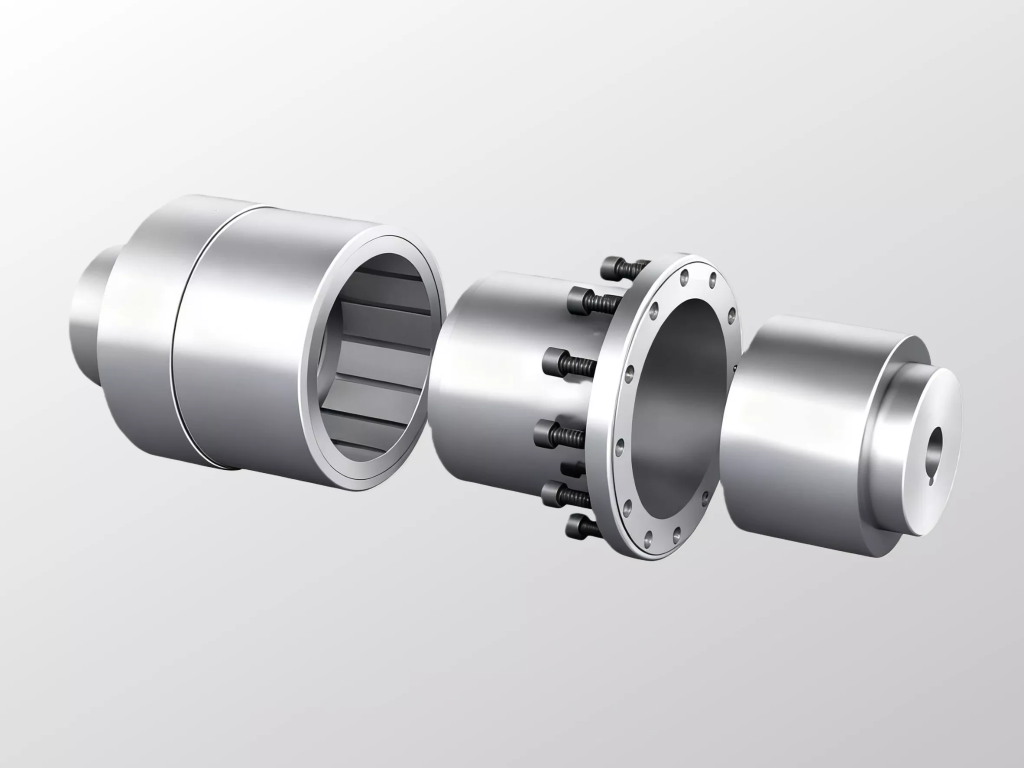
Whether or not a permanent magnet coupling is suitable for a particular application is determined by performance parameters. These factors are responsible for affecting safety, efficiency, and service life.
Rated Torque
The rated torque defines the maximum continuous torque that the coupling can transmit. It is the most important selection parameter.
If operating torque exceeds this value, magnetic slip occurs instead of mechanical failure. This protects the connected equipment from damage. Often buyers will specify selection couplings with a safety margin.
Proper torque selection ensures stable long-term operation. Undersized couplings may slip excessively and generate heat.
Maximum Operating Speed
Each coupling has a maximum allowable rotational speed that depends on rotor balance, magnet retention, and structural design.
Precision manufacturing for high-speed operation is required. Operation out of the speed limits causes vibration or mechanical stress.
This parameter is especially critical for pumps and compressors.
Temperature Capability
Permanent magnets lose strength as temperature increases. Excessive heat may cause irreversible demagnetization.
Manufacturers specify maximum operating temperatures. Rare earth magnets generally offer better high-temperature performance.
Good thermal management is imperative in challenging environments.
Misalignment Tolerance
Magnetic couplings tolerate minor shaft misalignment. This simplifies installation and reduces alignment time.
However, excessive misalignment reduces torque capacity. It may also increase vibration.
This tolerance adds flexibility to system design.
5. Advantages and Disadvantages of Permanent Magnet Couplings
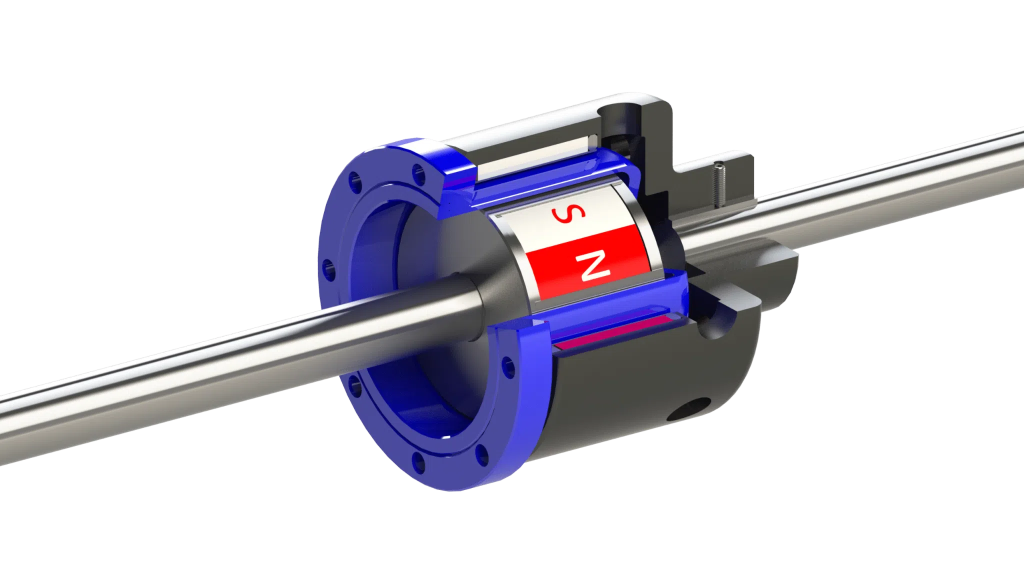
“Permanent Magnet Couplings have many advantages but also have limitations. Buyers have to consider these limitations while deciding on these couplings.”
Advantages of Permanent Magnet Couplings
1. No Mechanical Contact
No physical contact is necessary to transmit the torque. No friction is involved due to the lack of contact. Increased lifespan of the system component. Enhanced reliability over time.
2. Extremely Low Maintenance
There are no rubbing parts which require any lubrication.
Maintenance is easy.
Labor costs and downtime are reduced. The savings are significant.
3. Leak-Free Power Transmission
There is transfer of torque through a locked section of a contained shell. Mechanical seals are eliminated.
This will prevent leakage altogether. Safety as well as the environment will improve.
4. Built-in Overload Protection
Magnetic slip happens under overload situations. There is no accompanying mechanical damage.
Protection is provided for the motors and gearboxes. Recovery is fast in case of faults.
5. Longer Equipment Lifespan
Smooth transfer of torque helps minimize vibrations. The bearings also experience a lot less stress.
A longer equipment lifespan. Replacement times are extended.
6. Quiet and Smooth Operation
The level of noise produced is low. Vibration levels are also kept low.
This enhances the environment of the workplace. Structural fatigue is also reduced.
7. Improved Operational Safety
Sealed designs remove exposed rotating parts. Injury risk is reduced.
Safety improves in hazardous environments. This is critical in many industries.
8. Reliable in Harsh Environments
Magnetic couplings perform well in wet or corrosive conditions. There are fewer failure points.
They are ideal for continuous-duty applications. Downtime is minimized.
Disadvantages of Permanent Magnet Couplings
1. Higher Initial Cost
Permanent magnet couplings require a higher upfront cost. Rare earth magnet costs add to this.
There can also be certain budget constraints, but in most cases, the advantage of saving in the future
2. Limited Torque Capacity
Torque is also limited by magnetic strength. Very high torque applications are a concern.
For higher torques, larger sizes may be required. Space may be a concern.
3. Temperature Sensitivity
High temperatures affect magnetic strength. They cause permanent damage.
This limits use in extreme heat.
Thermal control is an important factor.
4. Magnetic Interference Risk
Strong magnetic fields have an effect on electronic equipment. Shielding could be required.
System Design complexity will be increased.
Layout planning will be required.
5. Efficiency Loss During Slip
Slip also generates heat. Slip is undesirable when it is continuous.
Proper sizing will prevent this problem. It is recommended to monitor.
6. Larger Size for High Torque
High-torque designs require larger couplings. A compact system could present problems.
The design flexibility is decreased. Space planning is vital.
7. Dependence on Rare Earth Materials
Supply of rare earth magnet:
Supply of rare earth magnet varies.
Price varies.
This leads to sourcing risks. Long-term planning is necessary.
8. Poor Performance under Shock Loads
Sudden increase in torque will cause the object to slip repeatedly. Heat will be generated.
Mechanical couplings may handle shock better. Application analysis is critical.
6. Application Scenarios of Permanent Magnet Couplings
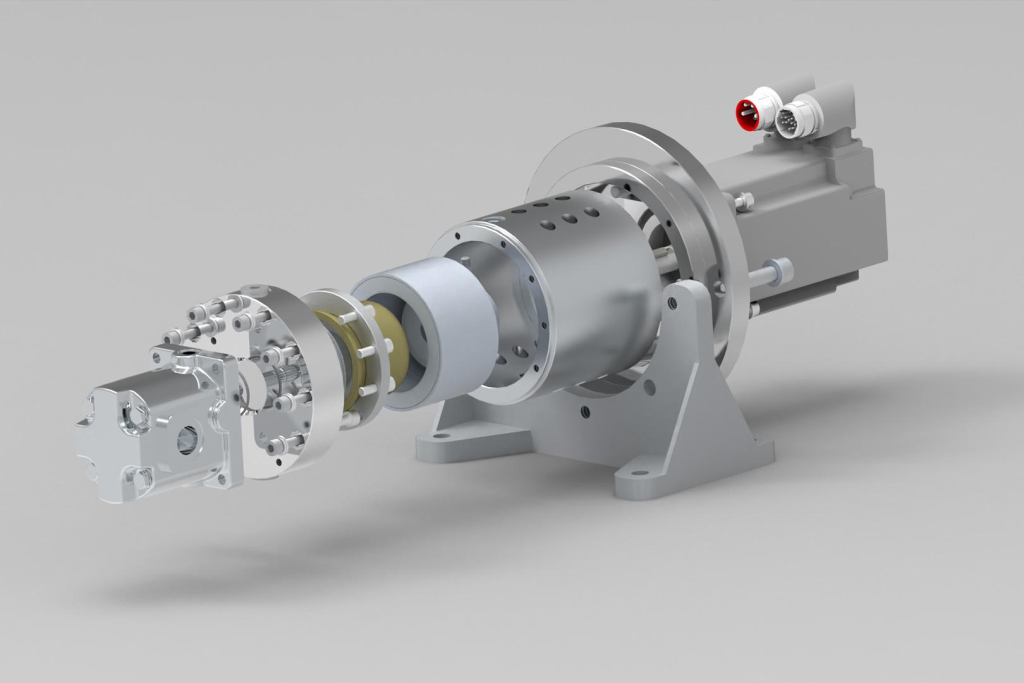
Permanent magnet couplings are often required in applications that require safety, sealing, and dependability.
Chemical processing industry
These pumps use magnetic couplings, which prevent leakage. In chemical pumps, the use of magnetic couplings ensures the containment of hazardous
Safety and environmental protection are improved. Mainténance is lowered.
Pharmaceutical and Food Processing
They prevent contamination. There is no lubricant leakage.
Cleaning and Sterilization: These processes become easier.
Regulatory Compliance: Regulatory
Water and Wastewater Treatment
It must be able to continue to run without stopping. It must be able to
They resist corrosion.
Operating costs are lowered.
Oil and Gas Industry
Prevention of leaks is of utmost importance.
Magnetic coupling eliminates dynamic seals.
Safety improves in flammable environments. Risks in the environment decrease.
Mining and Heavy Industry
Frequent changes in the loads occur. Magnetic couplers offer overload protection.
The damage to equipment is minimal. Maintenance costs become lower.
خاتمة
Permanent magnet couplings have emerged as an effective solution to meet modern industrial power transmission concerns. They ensure leak-free operation and maintenance and protection are inherent.
The high initial investment makes sense in the long run, especially because reliability is maximized in a sealed, continuous duty environment.


 Arabic
  English
  Spanish
  French
  Italian
  Portuguese
  Turkish
  Chinese
  Vietnamese
  Thai
Thai  Japanese
  Korean